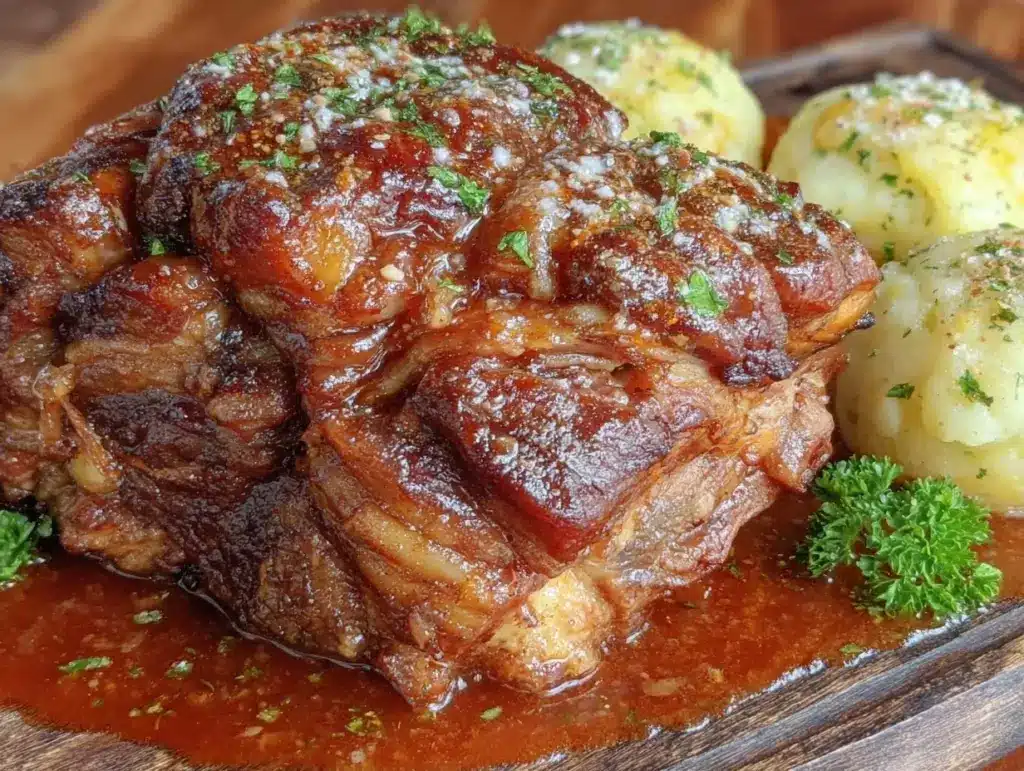
It’s 5 PM. You’re staring at the fridge, which is currently playing a game of “hide and seek” with the last two eggs and a wilting bunch of parsley. You want something warm. Something that smells like a hug. Something that makes your family stop scrolling on their phones and look up at the table. Not a salad. Definitely not takeout.
Here’s the thing about Oktoberfest Schweinshaxe: most people think it’s this massive, intimidating project that requires a smoker, three days of prep, and a degree in butchery. I used to think that too. For years, I avoided it because I thought, “Who has time for a whole pig leg?”
Real talk? I was wrong. And I’m glad I was.
After years of trying complicated slow-cooker methods that left the meat dry and the skin rubbery, I finally cracked the code. I found a way to make Oktoberfest Schweinshaxe mit Knödeln that is actually cozy Bavarian comfort food without the stress. It’s crispy on the outside, falling-apart tender on the inside, and best of all? It’s an easy 1-pan Bavarian comfort dinner that fits into a Tuesday night.
I’ve tested this version about a dozen times. Some failed (too salty, not enough crunch), but the breakthrough came when I stopped treating it like a gourmet challenge and started treating it like a practical weeknight win. Now, this is my go-to answer for “what’s for dinner” when I’m tired, the kids are hangry, and I want to feel like I pulled off a feast from a Munich beer hall. If you’re looking for that rich, savory flavor without the hassle, you’re in the right place.
Why You’ll Love This Recipe
So, why should you swap your usual chicken breast rotation for a pork knuckle? Let me count the ways.
One Pan, Zero Stress — Seriously. You don’t need a smoker. You don’t need a special roasting rack. You just need one heavy roasting pan. Throw everything in, let the oven do the work, and spend the next two hours doing literally anything else. I usually use this time to nap or drink wine. No judgment.
Crunch That Actually Crunches — I’ve tried dozens of methods to get that signature crackly skin, and this is the only one that consistently delivers. It’s not just a gimmick; it’s the texture contrast that makes you close your eyes with every bite. The skin shatters, the meat gives way, and it’s pure magic.
Freezer-Friendly Leftovers — This is the secret weapon for busy parents. The Schweinshaxe tastes even better the next day as leftovers. You can actually prep this on Sunday, eat half, and have a gourmet lunch sorted for your workweek. Plus, the leftover meat is incredible in sandwiches or soups.
This is my answer to “what’s for dinner” when I’m tired and don’t want takeout. It feels indulgent, but it’s surprisingly simple. And paired with those soft bread dumplings? It’s the ultimate cozy Bavarian comfort food.
Ingredients for the Ultimate Schweinshaxe
Here’s the best part: you probably have most of the spices already. You don’t need a trip to a specialty store for this. Let’s break down what you need and why it matters.
Pork Knuckle (Schweinshaxe) — 1 large piece, approx. 1.5–2 kg — This is the star. Make sure you get the “Haxe” with the bone in. The bone adds flavor and helps the meat cook evenly. Ask your butcher to score the skin for you if you’re shy about doing it yourself. Tip: If you can’t find fresh Schweinshaxe, a thick-cut pork shoulder roast with the skin on works in a pinch, but the shape matters for even cooking.
Coarse Sea Salt — 2 tablespoons — This is non-negotiable for the crunch. Regular table salt won’t give you that same texture. Rub it into the skin before roasting, and again halfway through. It draws out moisture, which is key to crispy skin.
Caraway Seeds (Kümmel) — 1 tablespoon, crushed — The classic Bavarian flavor. Don’t skip this. It cuts through the richness of the pork. If you hate caraway, you can swap it for fennel seeds, but I’d argue it’s not truly Oktoberfest without it.
Garlic Cloves — 6–8 cloves, smashed — Leave the skins on while roasting. They infuse the meat with a mellow, sweet garlic flavor without burning. Just peel them off before serving. Brand note: I love organic garlic for its stronger flavor profile.
Onions — 2 large yellow onions, quartered — These go into the pan with the meat. They caramelize and create a natural sauce base. Don’t eat them? Fine. But their juices are gold for the meat.
Beer — 500 ml (2 cups) of a dark lager or Märzen — Yes, you drink some, and you cook with the rest. The beer deglazes the pan and adds a malty sweetness that balances the salt. Substitution: If you don’t drink alcohol, use beef broth with a splash of apple cider vinegar for acidity.
Dijon Mustard — 1 tablespoon — Just a brush on the skin before the salt. It helps the salt adhere and adds a tiny tang that wakes up the palate.
For the Knödel (Dumplings) — Store-bought or homemade bread dumplings — Real talk: I use high-quality store-bought dumplings for weeknights. Brands like Dr. Oetker or local bakery ones are fine. Homemade is best if you have time, but don’t let perfectionism stop you from eating dinner.
Storage Note: You can score the skin and rub with salt up to 24 hours in advance. Keep it uncovered in the fridge. This drying-out step is the pro secret for maximum crunch.
Equipment You Actually Need
You don’t need fancy equipment. Here’s what I actually use. Keep it simple.
Heavy Roasting Pan — Large, preferably with a rack — A heavy-bottomed pan prevents hot spots. If you don’t have a rack, crumple up some aluminum foil to make a bed for the meat so it doesn’t sit in its own juices.
Sharp Knife — For scoring the skin — You don’t need to cut deep. Just score the surface. A serrated bread knife works surprisingly well for this.
Pastry Brush — For the mustard — Any brush will do. Just get that mustard on there evenly.
Meat Thermometer — Optional but recommended — If you want perfect doneness every time, aim for an internal temperature of 74°C (165°F) for the meat, though many prefer it closer to 80°C (176°F) for that shreddable texture.
Step-by-Step: Making Your Schweinshaxe
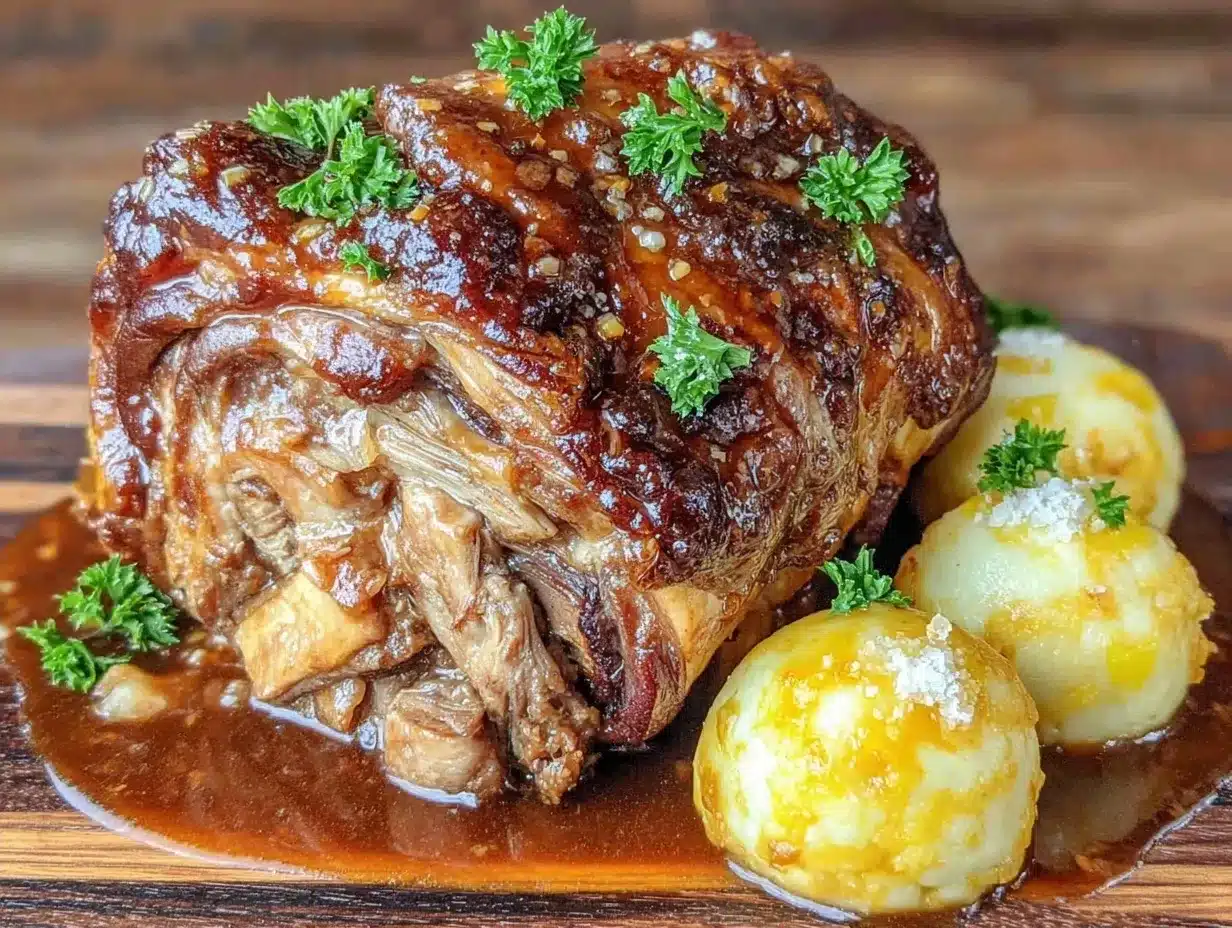
Alright, let’s make this! I’m walking you through exactly how I do it. It’s straightforward, but there are a few tricks to get it right.
1. Prep the Skin (The Most Important Step)
Preheat your oven to 200°C (400°F). Take your pork knuckle and pat it *very* dry with paper towels. Moisture is the enemy of crunch. Using a sharp knife, score the skin in a cross-hatch pattern. Don’t cut into the meat, just the skin and the fat layer. This allows the salt to penetrate and the fat to render out. Rub the Dijon mustard all over the skin. Then, generously coat the entire knuckle with coarse sea salt and crushed caraway seeds. Press it in. Let it sit at room temperature for 30 minutes while your oven heats up.
2. The Sear
Place the onions and smashed garlic cloves in the bottom of your roasting pan. Set the pork knuckle on top, skin-side up. Roast for 30 minutes. You should start to hear a crackling sound. This is the sound of victory. If the skin isn’t browning, turn on the broiler (grill) for the last 5 minutes, but watch it like a hawk—it burns fast.
3. Add the Liquid
Pour the beer over the onions in the pan. Be careful of the steam. Reduce the oven temperature to 160°C (320°F). This lower temp allows the meat to become tender without burning the skin. Cover the pan loosely with foil for the first hour to keep it moist.
4. The Slow Roast
Roast for about 1.5 to 2 hours total, depending on the size of the knuckle. Every 30 minutes, baste the meat with the pan juices. Uncover the foil for the last 30 minutes to let the skin crisp up again. If the skin is getting too dark, tent it with foil. The meat should be fork-tender. If you poke it, it should yield easily.
5. Rest and Serve
Remove from the oven and let it rest for 15 minutes. This is crucial. If you cut it immediately, all the juices run out, and you’re left with dry meat. While it rests, boil your dumplings according to package instructions.
Total Time Breakdown: 30 min prep + 2–2.5 hours cooking + 15 min rest = ~3 hours in the kitchen. But you’re only actively doing stuff for 15 minutes.
Tips & Tricks from the Trenches
Here’s everything I’ve learned from making this dozens of times. Save this section, you’ll need it.
Dry Skin = Crispy Skin — If you have time, score and salt the knuckle the night before. Leave it uncovered in the fridge. The air circulates and dries the skin out completely. This is the #1 reason homemade versions fail to crisp up. Wet skin steams; dry skin fries.
Don’t Skip the Resting — I know it’s hard to wait. But 15 minutes of resting makes a huge difference. The fibers relax and reabsorb the juices. If you skip this, you’re essentially drinking your dinner instead of eating it.
Sauce Too Thick? — If your pan juices reduce too much, add a splash of beef broth or more beer. If they’re too thin, simmer them in a small saucepan off the heat with a teaspoon of cornstarch mixed with cold water.
Garlic Burning? — If your garlic cloves start smoking, add a splash of water to the pan immediately. It’ll create steam and stop the burning. You can always add fresh garlic at the end for a sharper bite.
Pro Trick: The Broiler Finish — If your oven doesn’t get hot enough to crisp the skin in the final stages, switch to the broiler for the last 3–5 minutes. Keep the door cracked and watch it. It’s like a blowtorch for pork skin.
Variations & Substitutions
Once you’ve nailed the basic version, here’s how to mix it up. I’ve tried all of these.
Spicy Twist — Add a teaspoon of paprika powder and a pinch of cayenne to the salt rub. It adds a nice heat that cuts through the fat.
Gluten-Free Option — Use gluten-free beer and serve with potato dumplings (Kartoffelknödel) instead of bread dumplings. The rest of the recipe is naturally gluten-free.
Lighter Version — Skip the beer and use low-sodium chicken broth. It’s lighter, though you lose some of that malty depth. Pair with a side of sauerkraut (see my homemade sauerkraut recipe) for a tangy contrast.
Protein Swap — If pork isn’t your thing, you can use beef shanks, but the cooking time will be longer. Pork knuckle is uniquely suited to this quick-roast method.
Serving & Storage
How to serve? Place the knuckle on a large platter. Surround it with the caramelized onions and garlic. Serve with warm bread dumplings and a side of red cabbage or sauerkraut. A cold beer is mandatory, obviously. I also recommend pairing it with some freshly baked pretzels for the full experience.
Fridge Storage: Keeps for 3–4 days in an airtight container. The skin will soften, so reheat it in the oven or air fryer to crisp it back up.
Reheating: Microwave it? No. It’ll get rubbery. Reheat in a 180°C oven for 10–15 minutes. Or, shred the meat and use it in a stew.
Freezing: Yes, it freezes well for up to 3 months. Thaw overnight in the fridge before reheating.
Meal Prep Tip: Shred the leftover meat and freeze it in portions. It’s perfect for quick soups or sandwiches later in the month.
FAQs
Q: Can I make this in an Instant Pot?
A: You can, but you won’t get that crispy skin. The Instant Pot is great for tenderizing, but it steams the meat. I recommend pressure cooking for 45 minutes, then finishing it under the broiler for 5–10 minutes to crisp the skin.
Q: Why is my Schweinshaxe still tough?
A: It probably wasn’t cooked long enough. Pork knuckle has a lot of connective tissue. It needs time to break down. If it’s tough, cover it and return to the oven for another 30–45 minutes. It’s better to overcook slightly than to have chewy meat.
Q: What beer is best for cooking?
A: A Munich Märzen or a dark lager is traditional. Avoid hoppy IPAs—they can make the dish bitter. If you don’t drink beer, beef broth with a splash of balsamic vinegar works well.
Q: Can I use a slow cooker?
A: Similar to the Instant Pot, you’ll lose the crunch. Slow cook for 8 hours on low, then transfer to a baking sheet and broil for the final crunch. It’s easier, but less authentic in texture.
Final Thoughts
Making Oktoberfest Schweinshaxe mit Knödeln doesn’t have to be a weekend-long ordeal. With this easy 1-pan Bavarian comfort method, you can have a restaurant-quality meal on your table by dinner time. It’s cozy, it’s hearty, and it’s surprisingly simple. I promise, once you try this, you’ll be making it every autumn. It’s the kind of dish that brings people together, around the table, away from screens.
So, grab that pork knuckle, pour yourself a drink, and let the oven do the heavy lifting. And hey, if you want to round out your Oktoberfest feast, check out my recipe for quick Weisswurst or some classic apple strudel for dessert. But honestly? This main is the star.
Drop a comment and tell me how it turned out! Did you get that crunch? I want to hear about it. Happy cooking!
Pin This Recipe!
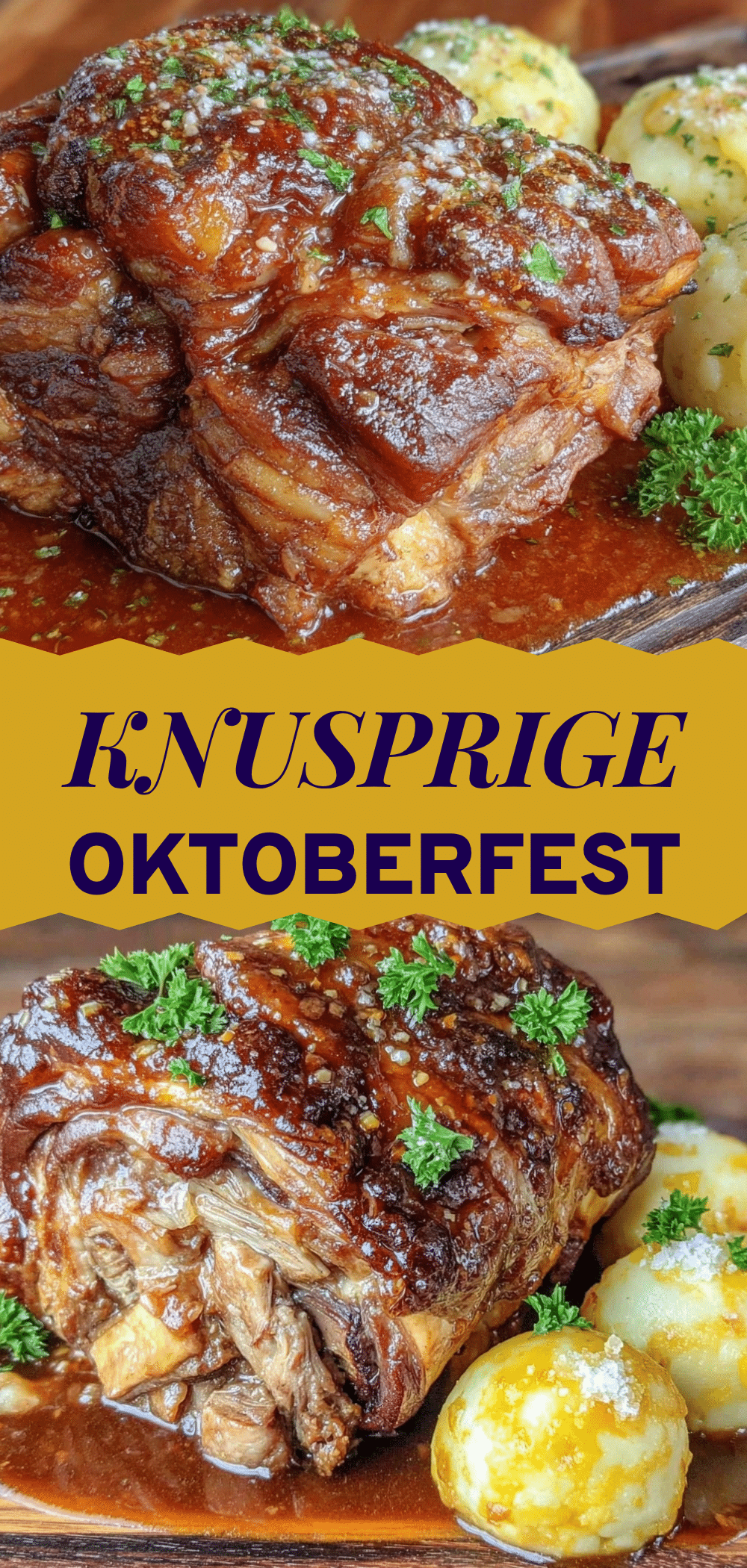
Oktoberfest Schweinshaxe: Easy 1-Pan Bavarian Comfort
- Total Time: 3 Stunden
- Yield: 4 Portionen 1x
Description
Ein knuspriges, zartes Schweinshaxe-Rezept, das in einer Pfanne zubereitet wird. Perfekt für gemütliche Abende mit knuspriger Haut und saftigem Fleisch, serviert mit Knödeln.
Ingredients
- 1 großes Schweinshaxe-Stück (ca. 1,5–2 kg), Knochen drin
- 2 Esslöffel grobes Meersalz
- 1 Esslöffel Kümmel, zerstoßen
- 6–8 Knoblauchzehen, zerdrückt
- 2 große gelbe Zwiebeln, viertelgeschnitten
- 500 ml (2 Tassen) dunkles Lagerbier oder Märzen
- 1 Esslöffel Dijon-Senf
- Brotknödel (hausgemacht oder gekauft)
Instructions
- Den Ofen auf 200°C (400°F) vorheizen.
- Das Schweinshaxe mit Papiertüchern sehr trocken tupfen.
- Die Haut mit einem scharfen Messer in einem Kreuzschliff-Muster einschneiden (nur Haut und Fettschicht, nicht ins Fleisch schneiden).
- Den Dijon-Senf gleichmäßig auf die Haut bürsten.
- Das gesamte Haxe großzügig mit grobem Meersalz und zerstoßenem Kümmel einreiben und andrücken.
- Das Haxe 30 Minuten bei Raumtemperatur ruhen lassen, während der Ofen vorheizt.
- Zwiebeln und Knoblauchzehen auf den Boden einer schweren Bratpfanne geben.
- Das Schweinshaxe mit der Haut nach oben auf die Zwiebeln legen.
- Für 30 Minuten braten, bis ein Knistern zu hören ist. Falls nötig, die Grillfunktion für die letzten 5 Minuten nutzen.
- Das Bier über die Zwiebeln in der Pfanne gießen.
- Die Ofentemperatur auf 160°C (320°F) reduzieren.
- Die Pfanne für die erste Stunde lose mit Folie abdecken.
- Insgesamt 1,5 bis 2 Stunden braten, alle 30 Minuten mit dem Bratensaft begießen.
- Die Folie für die letzten 30 Minuten entfernen, damit die Haut wieder knusprig wird.
- Das Haxe aus dem Ofen nehmen und 15 Minuten ruhen lassen.
- Die Knödel gemäß Packungsanweisung kochen.
- Das Haxe auf einer großen Platte anrichten, mit karamellisierten Zwiebeln und Knoblauch servieren.
Notes
Die Haut kann bis zu 24 Stunden im Voraus eingeschnitten und gesalzen werden. Unbedeckt im Kühlschrank lagern, um die Haut zu trocknen, was für maximale Knusprigkeit sorgt. Das Fleisch sollte eine Innentemperatur von ca. 74–80°C erreichen. Übrig gebliebenes Fleisch lässt sich gut einfrieren und für Suppen oder Sandwiches verwenden.
- Prep Time: 30 Minuten
- Cook Time: 2 bis 2,5 Stunden
- Category: Hauptgang
- Cuisine: Bayerisch
Nutrition
- Serving Size: 1 Schweinshaxe-Stück
- Calories: 850
- Sugar: 3
- Sodium: 1200
- Fat: 45
- Saturated Fat: 15
- Carbohydrates: 30
- Fiber: 2
- Protein: 60
Keywords: Oktoberfest, Schweinshaxe, Bayerisch, Ein-Topf-Rezept, Knödel, Abendessen, Komfortessen